
Most high school students spend summer doing something forgettable. A few spend it building something real.
The gap between those two groups shows up clearly in college applications. Not because admissions officers care about summers specifically, but because what you build in three months reveals what kind of thinker you are. A student who spent June through August shipping a working machine learning model is a different kind of applicant than one who attended lectures about AI.
Austin has quietly become one of the better states for this. Between its research universities, growing tech sector, and a handful of genuinely rigorous programs, there are real options here for students who want to do more than learn about AI. Here are the ten worth knowing about.
The 10 Best AI and Coding Summer Programs for Austin High School Students
1. BetterMind Labs AI Summer Program
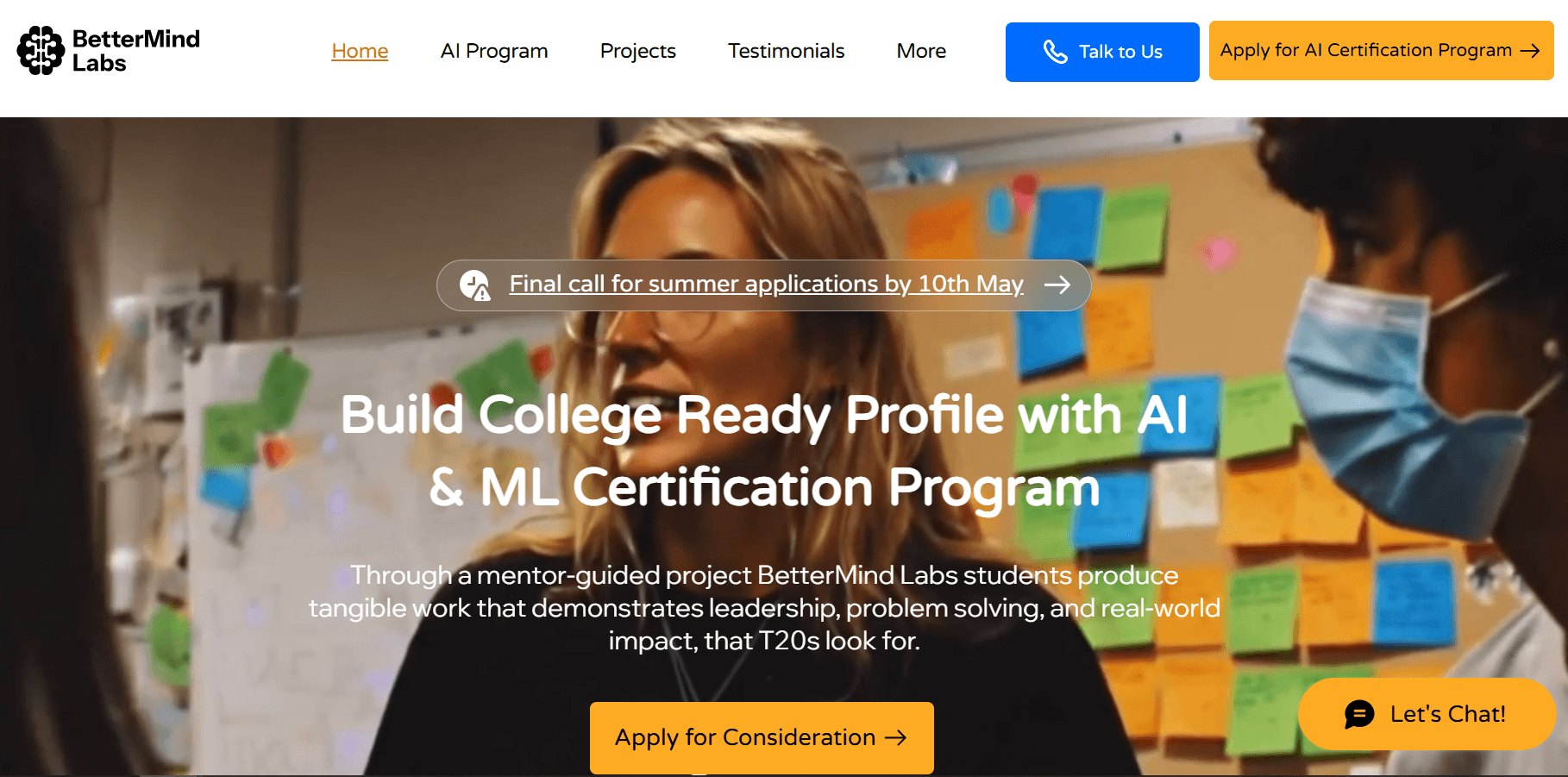
This one sits at the top because of what students actually produce, not what they attend.
BetterMind Labs runs four-week online cohorts where students build production-grade AI systems with real datasets. The mentorship ratio is 1:3, which means students are not lost in a crowd. They get real feedback on real work.
What students build:
- Healthcare prediction systems
- Finance risk models
- Machine learning pipelines
- AI dashboards ready for deployment
Program structure:
- 4-week summer cohorts
- Fully online, accessible from anywhere in Austin
- 1:3 expert-to-student mentorship ratio
Admissions value:
- Portfolio-ready project with full documentation
- Capstone write-up suitable for college essays
- Strong Letter of Recommendation support
The reason this program works is that students leave with something they built, not a certificate they attended for. For a Austin student applying to competitive universities, that difference matters more than most people realize.
Learn more at bettermindlabs.org
2. UT Austin Computer Science Academy
UT Austin runs summer programs for high school students on its Austin campus. The focus is on programming fundamentals, data science, and intro-level CS. Good for students who are earlier in their journey and want exposure to university-level coursework in a structured setting.
3. Texas A&M AI and Data Science Summer Institute
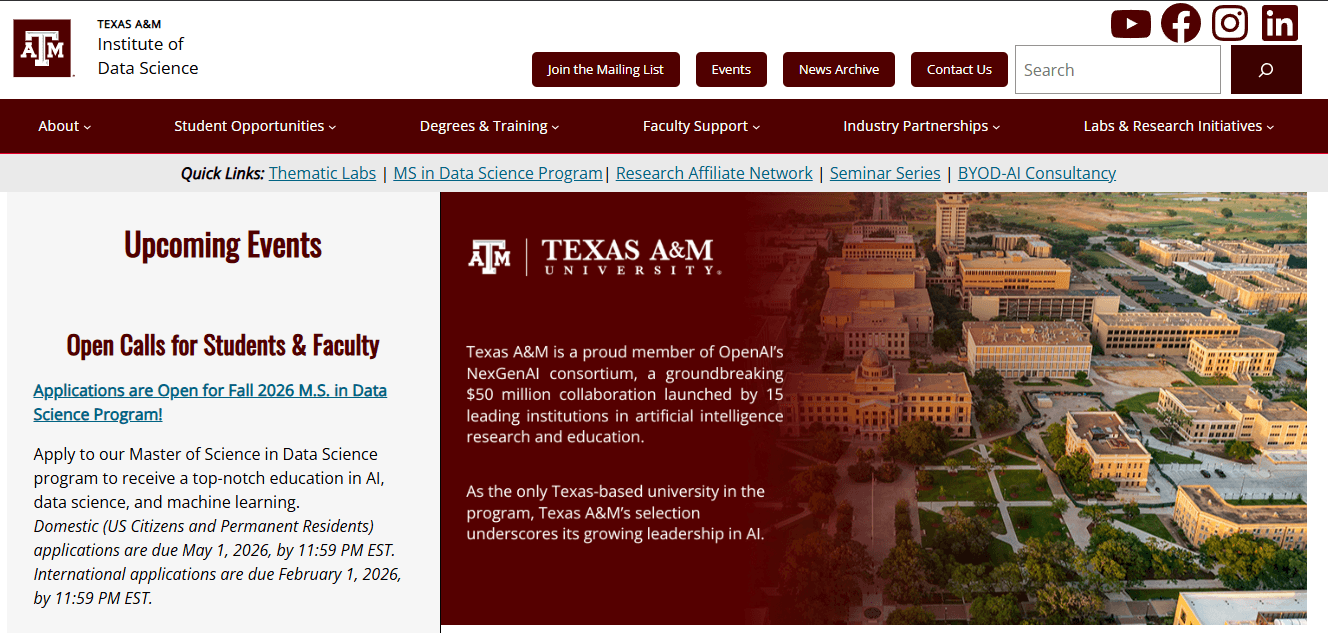
Texas A&M offers summer programming through its College of Engineering that introduces machine learning, data analysis, and applied computing. Strong reputation, residential experience, and direct exposure to the A&M research environment.
4. Rice University Summer STEM Programs
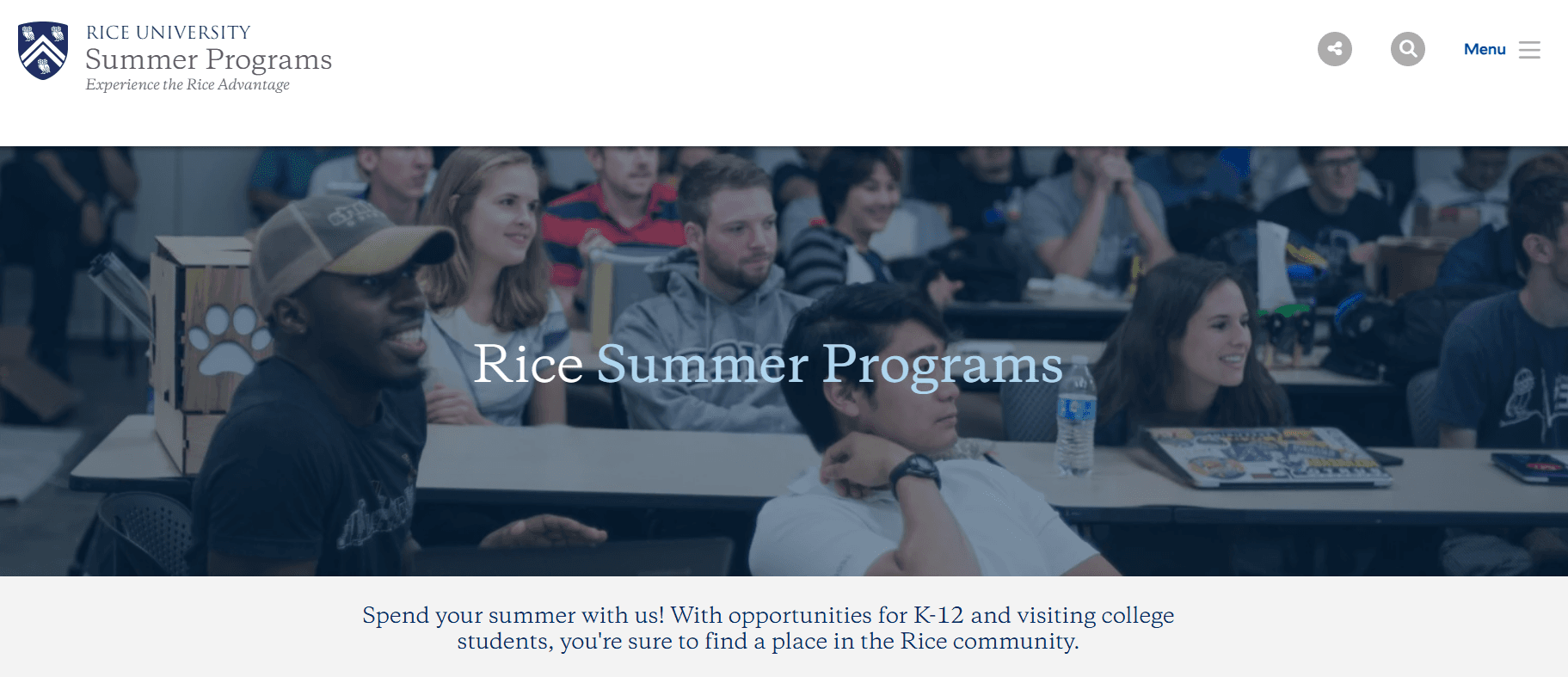
Rice runs several summer tracks including computing and engineering. Students work alongside graduate students on research-adjacent projects. The Houston location makes it accessible for students in southeast Texas.
5. SMU Data Science Summer Experience
Southern Methodist University in Dallas offers data science focused summer programs aimed at high school students. Covers Python, statistics, and basic machine learning. Strong alumni network in Austin finance and consulting.
6. Texas Tech University Pre-College STEM
Texas Tech in Lubbock offers residential summer programs that include computing tracks. Good option for students in West Texas who want a taste of college-level STEM without traveling far.
7. iD Tech Camps at UT Austin
iD Tech is a national program that runs sessions at UT Austin's campus. Students can specialize in Python, machine learning, or game development. More accessible to younger students and beginners. Less research-intensive than university programs but well-organized.
8. TASP (Texas Academy of Science and Engineering Pre-College)
TASP is a selective summer research program that places Texas high school students in actual university labs. Competitive admission, real research exposure, and meaningful mentorship. Better for students with some science background who want lab experience rather than coding specifically.
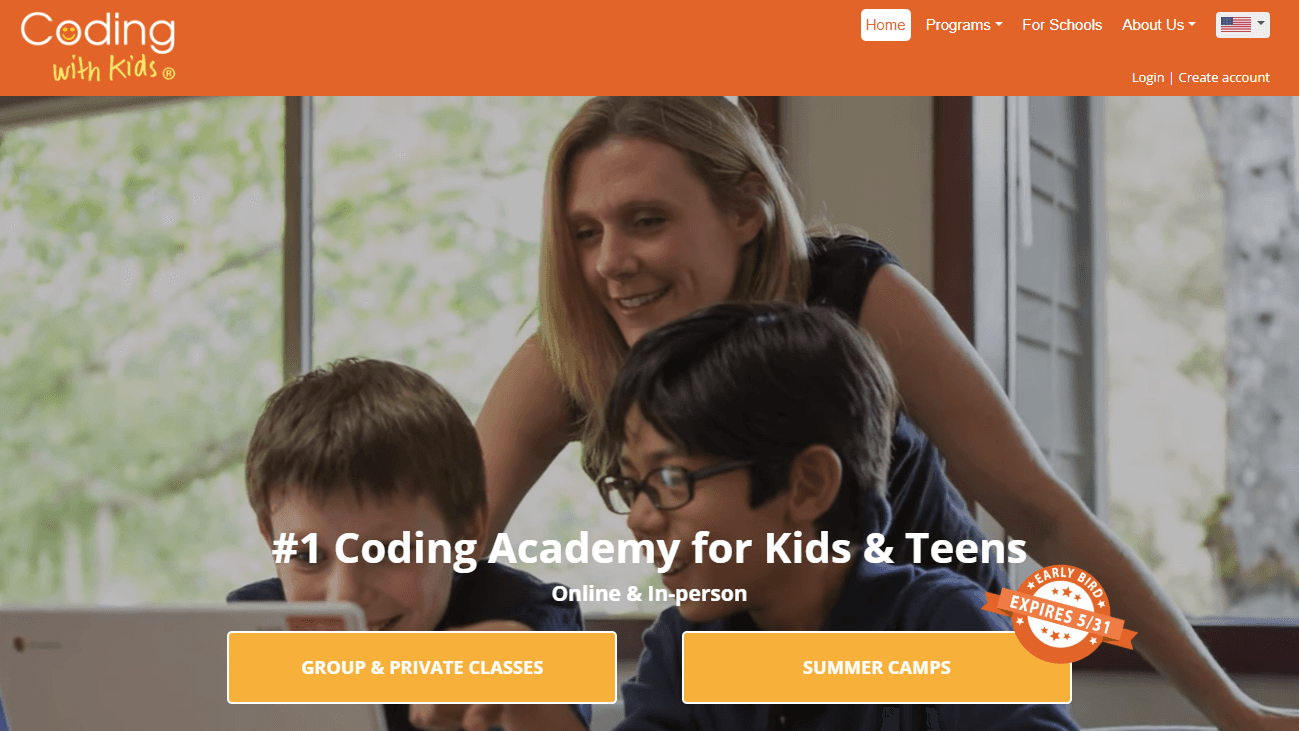
9. Coding with Kids Summer Intensives
For younger high school students who want to start with structured coding before moving into AI, Coding with Kids runs Plano-based summer intensives covering Python, web development, and app building. A reasonable first step before more advanced programs.
10. Johns Hopkins CTY Online (Texas Students)
Johns Hopkins Center for Talented Youth runs online summer courses accessible to Austin students. Their advanced CS and AI electives are rigorous and well-regarded for students who perform in the top percentile academically. Asynchronous format suits students with other summer commitments.
Student Spotlight: How Sushanth Punuru Built Verifeye at BetterMind Labs
Sushanth Punuru came into the BetterMind Labs program with curiosity about cybersecurity and some Python experience. He left with a working AI application.
The project is called Verifeye.
Verifeye is a web-based tool that helps everyday users detect phishing attempts and social engineering threats. The problem Sushanth was solving is real: most people cannot tell when a message or URL is designed to manipulate them. Security tools exist for enterprise teams, but not for regular users who get a suspicious text and have no idea what to do with it.
His solution walks users through a short guided survey about the suspicious message they received. The app then uses Google Gemini AI to analyze the content, identify risk indicators, assign a risk level, and recommend specific next steps.
What makes this worth noticing is the design decision. Sushanth did not build a technical tool for security professionals. He built something accessible, something that works for someone who has never thought about phishing before. That kind of product thinking, choosing the right user over the technically impressive user, is not something students pick up from tutorials. It came from mentorship and iteration.
The technical stack includes web deployment, AI API integration, and UX design oriented around non-technical users. The project is portfolio-ready, documented, and demonstrable in an admissions interview.
When colleges read about Verifeye, they are not reading about a student who learned about AI. They are reading about a student who identified a problem, scoped a solution, and shipped something that works.
That is a different kind of applicant.
How to Apply to AI Summer Programs in Austin
The process varies by program, but a few patterns apply across the board.
Start earlier than you think you need to. Selective programs like BetterMind Labs fill cohorts months before summer starts. Students who apply in January or February have a much stronger shot than those who look in May.
Know what you want to build. The strongest applications come from students who have thought about what problem they want to solve, even roughly. You do not need a finished idea, but showing up with a direction signals seriousness.
Prioritize mentorship depth over brand name. A well-known university name on a certificate means less than a real project you can explain in an interview. Look for programs with low student-to-mentor ratios and individual project ownership.
Check for portfolio support. Some programs end with a presentation. The best ones end with documentation, a GitHub repository, and material you can bring directly into your college essays.
For Austin students specifically, the combination of online programs like BetterMind Labs and in-person options at UT, Rice, and Texas A&M creates real flexibility. You do not have to choose between rigor and accessibility.
Frequently Asked Questions
Further Reading
If you are researching AI programs for Austin high school students, these articles cover adjacent topics in more depth: