

Introduction: Summer AI Internship Worth It?
AI Internship opportunities are becoming increasingly popular, but are they actually worth pursuing as a high school student?
The more important question is this: if thousands of students complete an internship certificate every summer, what actually distinguishes one applicant from another?
Admissions officers at selective universities increasingly evaluate evidence of initiative, problem solving, and intellectual curiosity alongside grades and standardized test scores. A short internship that consists mainly of watching videos or shadowing professionals rarely demonstrates those qualities. By contrast, building an AI system that solves a real problem, supported by expert mentorship and clear technical documentation, creates a far stronger academic narrative. The value of an internship depends far less on its title than on what you genuinely create during it.
Table of Contents
- Introduction: Summer AI Internship Worth It?
- What Is a Summer AI Internship for High School Students?
- The Benefits of Doing an AI Internship Before College
- What Makes a Summer AI Internship Truly Worthwhile?
- How One Student Built an AI Tennis Coach Using Computer Vision
- How to Choose the Right AI Internship This Summer
- FAQs
- Conclusion
What Is a Summer AI Internship for High School Students?
A Summer AI Internship gives students practical exposure to artificial intelligence through structured learning, research, or engineering projects. The strongest programs emphasize building, testing, and improving real systems rather than simply introducing AI concepts through lectures or recorded videos.
Unlike university internships, high school AI internships usually focus on foundational machine learning, computer vision, natural language processing, and data analysis. Students often work with Python, public datasets, cloud development tools, and modern AI frameworks while learning how engineers solve real-world problems.
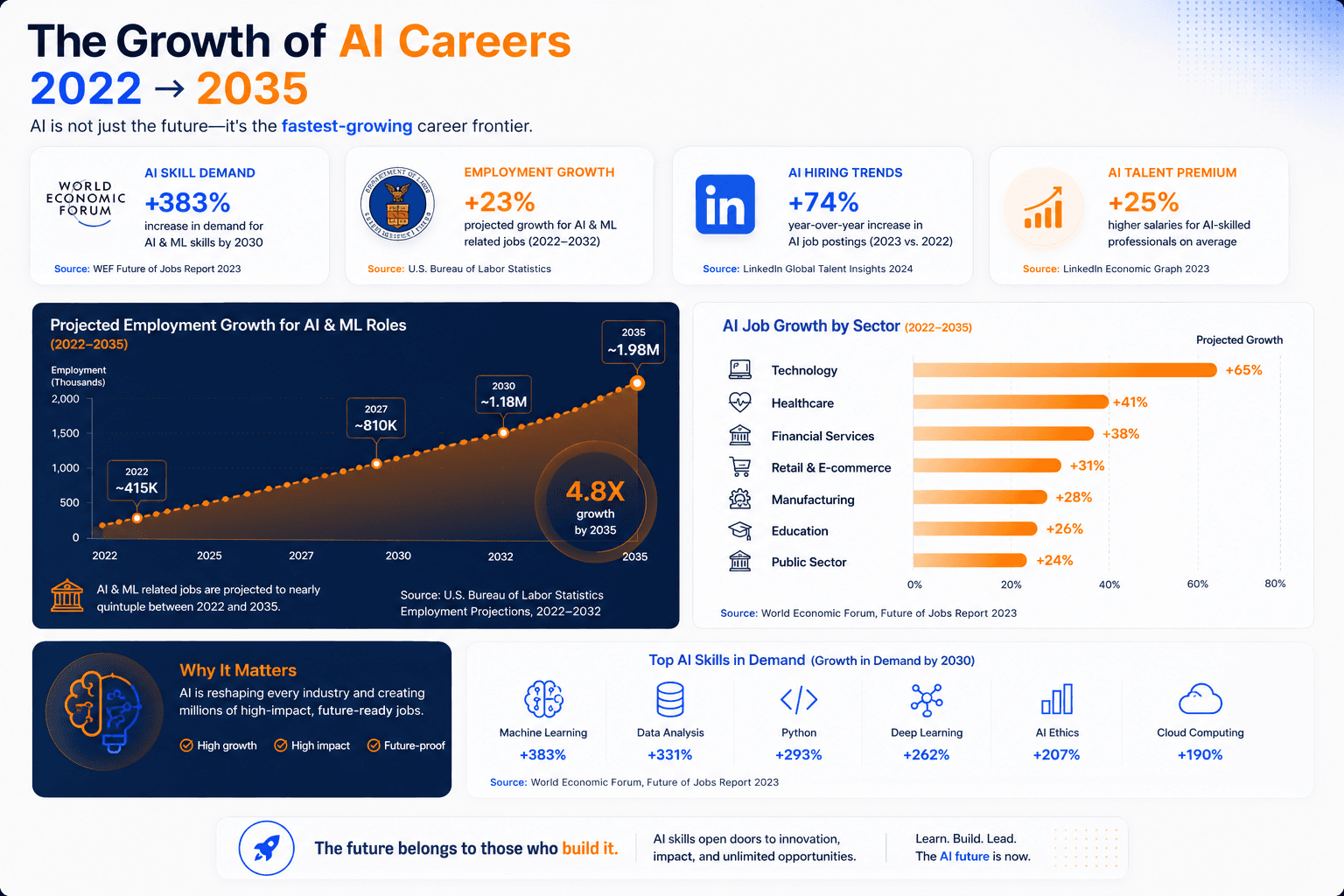
Recent reports continue to show rapid growth in AI-related careers. The World Economic Forum's Future of Jobs Report 2025 identifies AI and data skills among the fastest-growing competencies across industries. Similarly, the U.S. Bureau of Labor Statistics projects significantly above-average growth for computer and information research occupations over the coming decade.
An effective internship should help students answer questions such as:
- How do machine learning models make predictions?
- How is data collected and cleaned?
- How do engineers evaluate model accuracy?
- How can AI solve meaningful real-world problems?
These experiences become even more valuable when students document their process through GitHub repositories, technical reports, presentations, and demonstrations.
Students interested in admissions strategy may also benefit from reading Why AI Internships Matter for College Admissions of High School Students (Even With No Experience) before selecting a program.
The next question is whether these experiences actually improve college applications.
The Benefits of Doing an AI Internship Before College

A well-designed AI Internship helps students develop technical ability, independent thinking, and evidence of sustained curiosity. Those outcomes often matter more than receiving an internship certificate itself.
Many students assume admissions officers simply count internships. In reality, they evaluate what students accomplished.
Strong internships help students:
- Build technical confidence with Python and machine learning
- Apply mathematics to practical engineering problems
- Learn systematic debugging and experimentation
- Develop communication through project presentations
- Build portfolios demonstrating authentic work
According to the National Association for College Admission Counseling (NACAC), selective admissions processes increasingly consider sustained engagement and meaningful extracurricular achievement alongside academic performance.
Project-based internships also teach an important engineering principle: iteration. Machine learning models rarely work perfectly on the first attempt. Students learn to improve datasets, adjust parameters, evaluate accuracy, and refine solutions using evidence instead of assumptions.
This process demonstrates persistence, analytical thinking, and scientific reasoning.
Students considering broader opportunities can compare different programs in The Ultimate Guide to High School Internships: Top 10 Internship Programs for 2026.
Understanding the benefits naturally leads to another question: what separates an average internship from an exceptional one?
What Makes a Summer AI Internship Truly Worthwhile?
The most valuable Summer AI Internship combines structured curriculum, expert mentorship, challenging projects, and measurable outcomes. Programs focused only on passive learning rarely produce competitive portfolios.
A strong learning model resembles engineering design:
- Learn core concepts.
- Apply them through increasingly difficult projects.
- Receive expert feedback.
- Improve through multiple iterations.
- Present finished work publicly.
This mirrors how engineers develop production software.
The highest-impact programs typically include:
- Weekly mentorship sessions
- Small mentor-to-student ratios
- Real datasets
- Version-controlled code repositories
- Technical documentation
- Final demonstrations
Rather than completing disconnected exercises, students gradually build complete AI applications that integrate multiple concepts.
This approach also aligns closely with research on project-based learning, which consistently finds improved problem-solving, knowledge retention, and engagement compared with lecture-only instruction.
Students interested in strengthening their admissions profile should also explore Why AI Projects Are a Must-Have for High School Students Eyeing Top Colleges.
One real example illustrates why project depth matters far more than internship titles.
How One Student Built an AI Tennis Coach Using Computer Vision
The strongest AI Internship outcomes are real products solving authentic problems. One student transformed an interest in tennis into an AI-powered coaching system using computer vision, machine learning, and structured mentorship.
Every tennis player benefits from immediate feedback, but coaching is often expensive and difficult to access regularly.
Alex Yuen addressed this challenge by creating CourtVision AI, a computer vision platform capable of analyzing tennis technique from uploaded videos and images. Instead of replacing coaches, the system provides instant feedback that helps players identify form issues between practice sessions.
The project required integrating several advanced concepts:
- Computer vision
- Pose estimation
- Machine learning inference
- Data preprocessing
- User interface design
- Model evaluation
Rather than demonstrating isolated coding skills, the project showed end-to-end engineering capability.
For admissions officers, projects like these reveal far more than certificates. They demonstrate initiative, technical competence, creativity, and persistence through a tangible outcome.
How to Choose the Right AI Internship This Summer
Choosing a High Schooler AI Internship should focus on learning outcomes instead of marketing claims. The strongest programs consistently produce portfolios, technical skills, and mentorship rather than certificates alone.
Before applying, ask these questions:
- Will I build a complete AI project?
- Will experienced mentors review my work?
- Will I receive technical feedback every week?
- Will I finish with a portfolio I can showcase?
- Will I understand why my models work?
Be cautious of programs promising impressive credentials without requiring substantial work.
A worthwhile internship should leave students with:
- GitHub repositories
- Project reports
- Presentation experience
- AI engineering skills
- Increased confidence solving unfamiliar problems
Programs following structured mentorship and project-based learning models consistently provide stronger long-term educational value than passive online courses.
FAQs
Conclusion
Grades, test scores, and extracurricular participation remain important, but they no longer tell the complete story of a student's academic potential. Universities increasingly seek applicants who demonstrate curiosity through meaningful work, especially in emerging fields like artificial intelligence.
A thoughtfully designed AI Internship should help students build genuine technical ability, solve authentic problems, and communicate their thinking through substantial projects. Those experiences create stronger evidence of learning than certificates alone.
That philosophy sits at the center of BetterMind Labs. Through structured AI curricula, expert mentorship, and ambitious real-world projects, students develop portfolios that reflect authentic engineering ability while strengthening their preparation for future university applications.
If you are evaluating how to spend this summer, explore the programs available at bettermindlabs.org and choose an experience that leaves you with skills, projects, and confidence that continue well beyond the internship itself.