
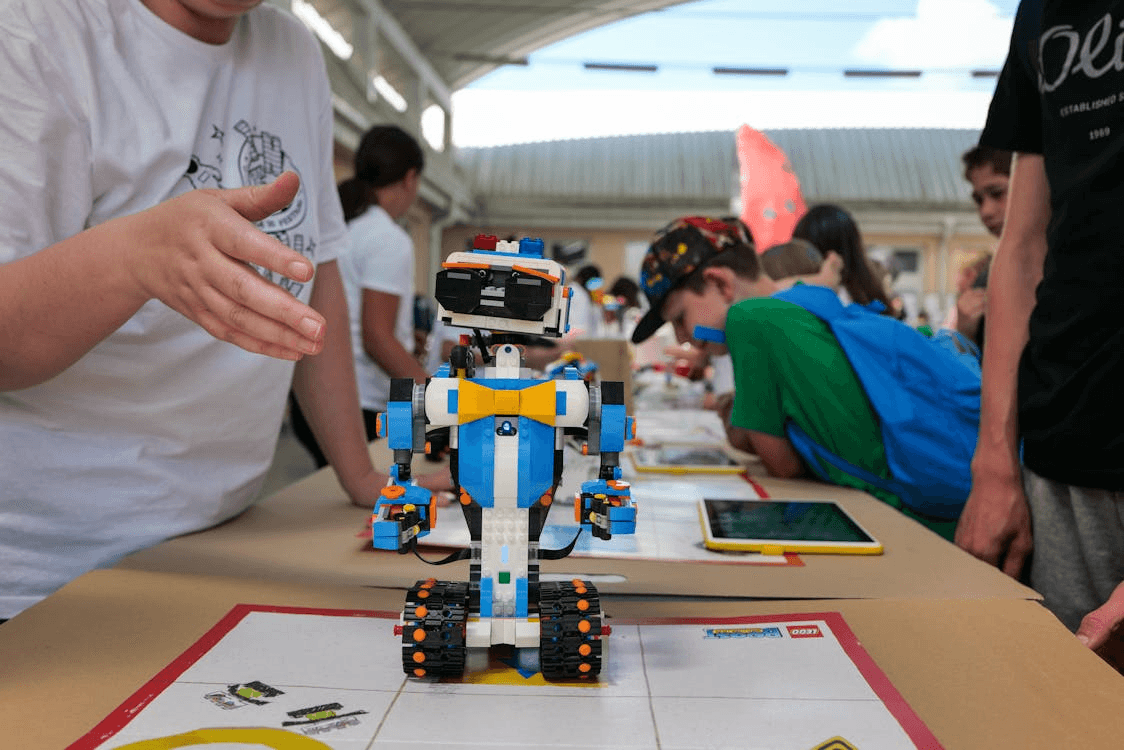
Introduction: Why Houston Science Fairs Matter
What actually separates a student who participates in science fair competitions from one who stands out in them?
Many high-achieving students assume that effort alone translates into recognition. Yet admissions reviewers and science fair judges evaluate something far more specific: structured thinking, originality, and measurable impact. A well-written report without a compelling research narrative often fades into the background, much like a neural network trained on weak features.
Houston hosts one of the most competitive ecosystems for Science Fair Competitions, with structured pathways leading to global platforms. But the real differentiator is not access to competitions. It is the ability to build real-world, technically grounded projects, especially in areas like AI and applied science. That distinction becomes critical as we explore where Houston science fairs lead and how students can position themselves effectively.
Table of Contents
- Top 15 Science and Engineering Fairs in Houston (2026)
- The Path to TXSEF and ISEF
- Case Study: AI Disease Prediction Project
- Frequently Asked Questions
- Conclusion: Launching Your STEM Research Journey
Top 15 Science and Engineering Fairs in Houston (2026)
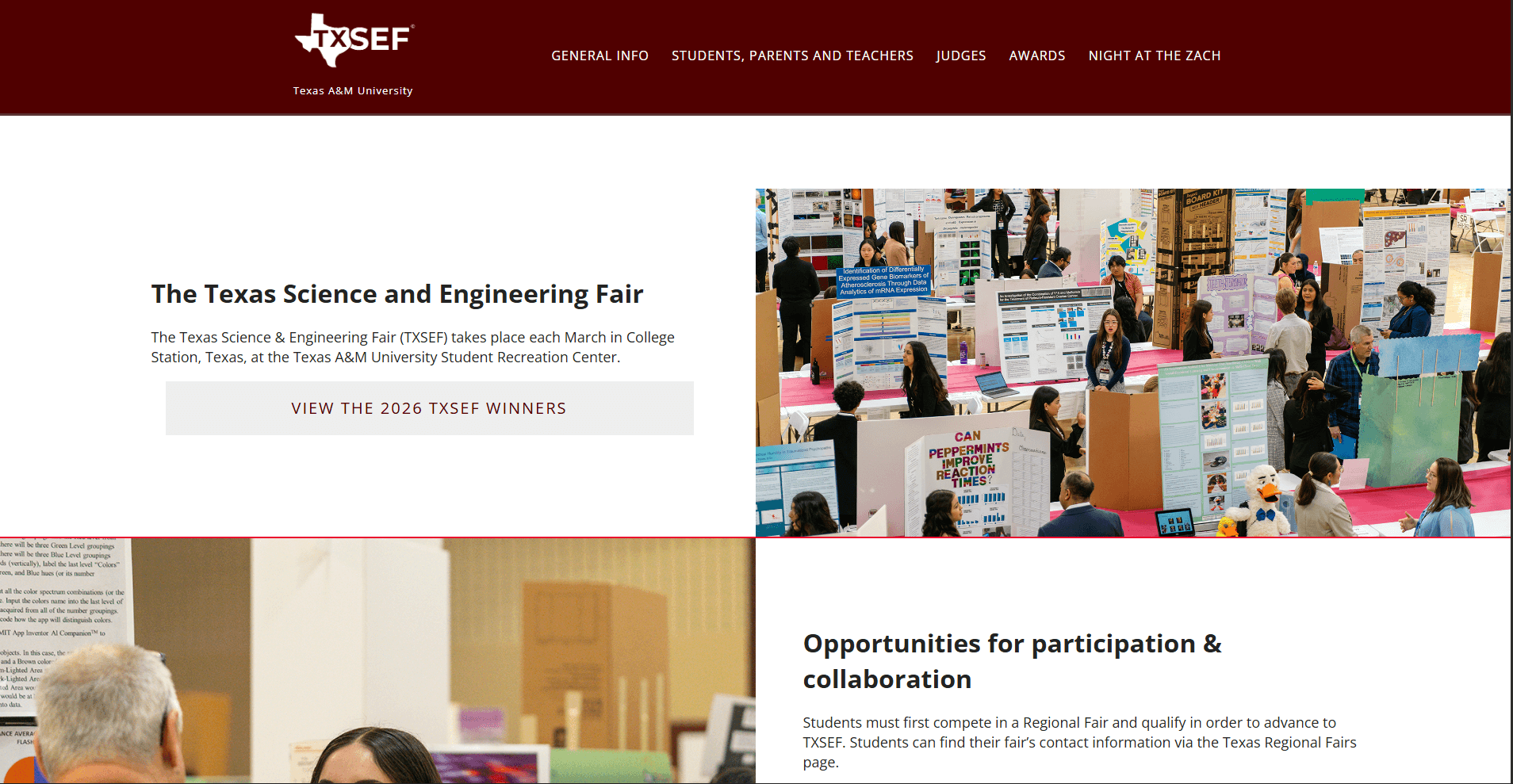
Houston hosts more than 20 regional fairs feeding into a centralized state system, making it one of the most structured science fair ecosystems in the U.S.
These competitions are not isolated events. They form a pipeline, where performance at regional levels determines access to state and international stages.
Key Competitions
- Texas Science & Engineering Fair (TXSEF)
- Science & Engineering Fair of Houston (SEFH)
- Alamo Regional Science & Engineering Fair
- Beal Bank Dallas Regional Science Fair
- Fort Worth Regional Science & Engineering Fair
- Central Texas Science & Engineering Fair (CTSEF)
- Coastal Bend Regional Science Fair
- Sun Country Science Fair (El Paso)
- Rio Grande Valley Regional Science Fair
- Greater Austin Regional Science & Engineering Fair
- East Texas Regional Science Fair
- Panhandle Regional Science Fair
- Southeast Texas Regional
- West Texas Regional
- Hill Country Regional
These fairs collectively involve:
- Over 1,000+ projects at TXSEF alone
- Representation across engineering, biomedical, environmental, and AI domains
- Strict compliance processes like IRB/SRC approvals via STEMWizard
What Recent Trends Show (2023–2026)
According to TXSEF official data, Baylor CTSEF reports, and Polygence research:
- AI and computational projects have increased by 35–40% in submissions
- Biomedical and environmental categories dominate top award selections
- Judges increasingly prioritize:
- Real-world applicability
- Data-backed conclusions
- Interdisciplinary thinking
Structural Insight
Students who succeed consistently follow a pattern:
- Identify a real-world problem
- Build a data-driven solution
- Validate results through experimentation or modeling
- Present findings with clarity and reproducibility
This resembles a well-designed machine learning pipeline. Input quality determines output quality.
For deeper preparation strategies, see:
Science Fair Projects: 10+ Award-Winning Ideas for Freshmen
Is 9th Grade Too Late to Start a Serious Research Project?
And this naturally raises a question: if Houston fairs are structured as pipelines, how exactly does a student progress through them?
The Path to TXSEF and ISEF
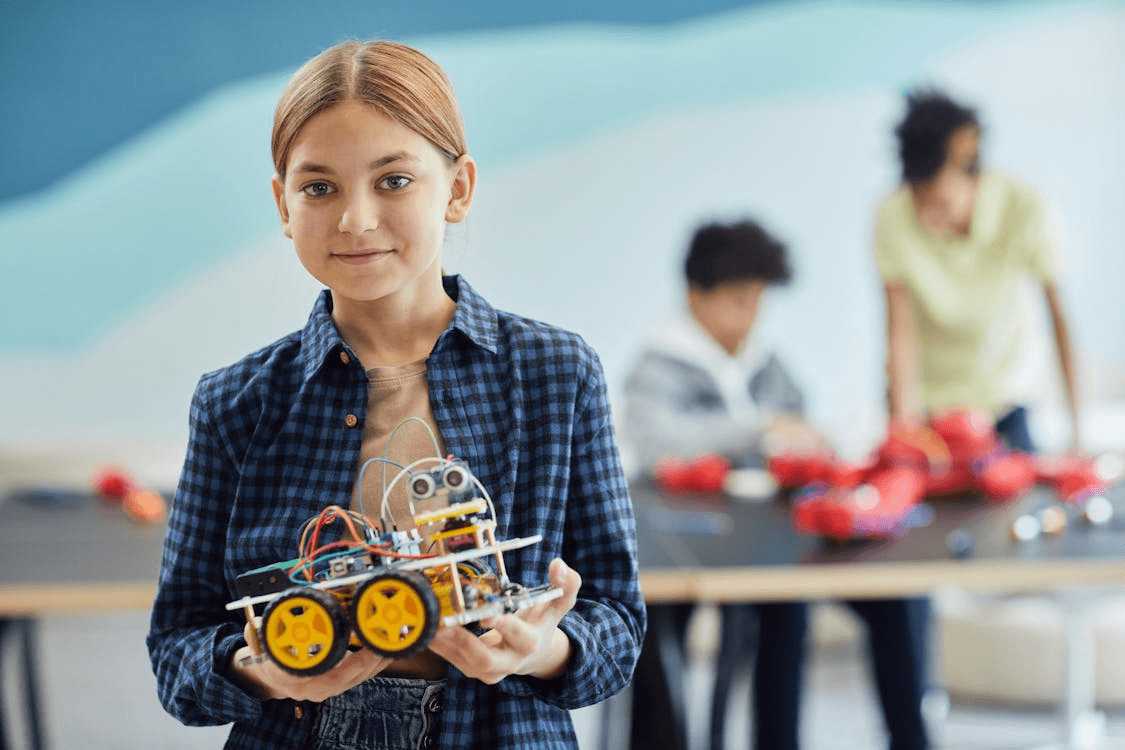
The journey from a school-level fair to international recognition is not random. It follows a clearly defined progression.
Step-by-Step Pathway
- School Science Fair
- Regional Science Fair
- Texas Science & Engineering Fair (TXSEF)
- Regeneron International Science and Engineering Fair (ISEF)
At TXSEF:
- Top regional winners compete among 1,000+ projects
- Judging includes:
- Technical interviews
- Poster evaluations
- Impact assessment
What Judges Actually Look For
Based on ISEF judging criteria, TXSEF guidelines, and recent fair reports:
- Research depth over presentation style
- Original methodology rather than replication
- Clear problem-solution alignment
- Quantifiable results
Data Insight
Students advancing to ISEF typically demonstrate:
- 2–3 months of structured research cycles
- Iterative experimentation (not one-time builds)
- Mentorship or expert guidance
Structural Learning Model
Students who progress effectively often operate within a framework:
- Weekly milestones instead of last-minute builds
- Expert feedback loops
- Integration of tools like Python, data analysis, or simulations
- Documentation from day one
This is not about working harder. It is about working within a repeatable system, similar to training a model with consistent feedback rather than random updates.
Explore further:
25 Unique Science Fair Ideas for High School Students
How to Turn Your Science Fair Project in to a Standout College Application
But what does a project that actually stands out look like in practice?
Case Study: AI Disease Prediction Project
What if a high school student could build a system that predicts disease risk using AI?
Vritee Agarwal | AI Disease Prediction & Lifestyle Analysis App
Overview of the Project
A machine learning program that forecasts:
- Heart conditions
- Disease
- A diabetic
- Obesity
- Being overweight
What Sets It Apart
- integrates lifestyle and clinical data
- offers tailored suggestions
- transcends binary forecasts
Technical Elements
- Pandas + Python
- Models using Scikit-Learn
- Streamlit web application
- Integration of Gemini AI
What the Learner Acquired
- Constructing ML models from the ground up
- Implementing practical applications
- Using AI to address healthcare issues
- Converting research into practical instruments
Why This Succeeds in Contests
- resolves a practical issue
- Exhibits multidisciplinary thinking
- yields quantifiable results
Crucial Perspective
These kinds of projects don't just compete; they stand out right away because they exhibit true innovation.
This example reflects a broader pattern seen in winning entries:
- Real-world problem selection
- Use of advanced tools
- Clear measurable outcomes
Structural Takeaway
Projects like this are rarely built in isolation. They emerge from:
- Guided project planning
- Technical skill-building in parallel
- Iterative feedback
This mirrors how complex systems are developed in professional environments.
Explore related insights:
From Wildfires to Wellness: AI Projects by High School Students Solving Real-World Problems
How to Build a High School Portfolio That Colleges Can’t Ignore
So, how should you go about attending your own science fair?
Frequently Asked Questions
Conclusion: Launching Your STEM Research Journey
Traditional metrics like grades and participation no longer distinguish students in competitive environments. Science fair competitions in Houston reveal a clear pattern: students who build real, structured projects outperform those who rely on effort alone.
The difference is not intelligence. It is process.
A well-designed project functions like a robust algorithm. It starts with a defined objective, iterates through feedback, and produces measurable outcomes. Students who adopt this approach build not just projects, but credible academic narratives.
BetterMind Labs operates within this exact philosophy:
- Structured project-based learning
- Expert mentorship
- Real-world AI applications
- Documented, measurable progression
If you are evaluating how to approach science fairs seriously, the next logical step is not to search for more competitions. It is to build the kind of project those competitions reward.

Leads the AI ML Program at BetterMind Labs. Writes about choosing a first project, program fit, and what parents should ask before enrolling.