Quick answer
Neither one is better by default. Colleges care about what you did and what you learned, not which format you used. Stanford's admissions office says "an exceptional depth of experience in one or two activities may demonstrate your passion," and MIT tells applicants to "choose quality over quantity."
Pick a winter STEM program if you want college credit, a structured course in a subject your school doesn't offer, or a fixed schedule to keep you on track. Build your own project if you already have a specific problem you care about, have finished a project before, and have someone who will review your work. Many students get the most from a mix: a structured course or mentored program that ends with a project they own.
Why it matters more this year: Common App reports 1,527,328 first-year applicants and 10,786,782 applications in 2025-26, with the average applicant sending 7.06 applications. More applications per student means each reader sees more files, and a clear, specific activity stands out faster than a long list.
Key takeaways
- Admissions offices at MIT, Stanford and Yale all describe depth and quality, not the number of activities.
- A program gives you structure, a credential and a deadline. A self-directed project gives you ownership and a story only you can tell.
- The Common App gives you just 150 characters to describe each activity, so whatever you do this winter needs a result you can state in one line.
- Some colleges have a separate place for independent work. MIT, for example, accepts an optional Maker Portfolio and a Research Supplement.
- The wrong choice is usually the one that doesn't match how you work. Be honest about whether you finish things on your own.
Why are students choosing between a winter program and their own project?
Every November, families ask me some version of the same question: "Should my child sign up for a winter program, or just work on something on their own?"
Fair enough. Winter is short, and January exams are close. Most students only have room for one serious commitment between December and March. On one side are structured winter STEM programs, such as university courses that run online from January into spring. On the other side is the self-directed extracurricular project: an app, a research question, a robot, a data analysis that a student plans and builds on their own.
Either one can work, and either one can end up as a line on an activities list that says very little. What decides it is how well the choice fits the student.
I see three patterns every year:
- The over-scheduler. This student signs up for a course, starts a project and joins two new clubs in the same month. By February, nothing is finished.
- The idea-without-a-plan. This student has a great idea for an app or research question, but no deadline, no reviewer and no clear first step. The project lives in a notes app until spring.
- The credential-collector. This student finishes a course with a good grade, but can't say what they would do with what they learned.
The goal of this post is to help you avoid all three. If you haven't looked at the program options yet, start with my full guide to winter STEM programs for high school students in 2026-27. This post is about the decision that comes before picking a specific program.
What does the latest application data tell us about activities?
Here is the current picture, using Common App's own End of Season Report for 2025-26 (published August 20, 2026):
Common App measure, 2025-26 | Number | Change from 2024-25 |
|---|---|---|
First-year applicants | 1,527,328 | Up 2% (from 1,495,475) |
Total applications submitted | 10,786,782 | Up 6% (from 10,157,068) |
Applications per applicant | 7.06 | Up 4% (from 6.79) |
International applicants | Not given as a total | Down 10% |
Students are applying to more colleges each year. Applications grew three times faster than the number of applicants. That means admissions readers are working through more files, and they spend limited time on each activities section. The format of that section hasn't changed. Every applicant still gets 10 slots and 150 characters per description, so in a bigger pool each of those characters has to work harder.
So I'd ask a different question this winter: which option will give you something specific and true to write in those 150 characters?
What do college admissions offices actually say about activities?
I'd rather quote admissions offices than guess, so here is what four official sources say in their own words.
MIT says on its "What we look for" page: "We don't expect applicants to do a million things. Choose quality over quantity." It adds: "Put your heart into a few things that you truly care about right now." MIT describes itself as "an active, hands-on place" and says that "you shouldn't just enjoy thinking about problems, you should be excited about doing something to help solve them."
Stanford writes on its admission overview that "Students often assume our primary concern is the number of activities they participate in," and then explains that "an exceptional depth of experience in one or two activities may demonstrate your passion." Stanford also wants "to understand the impact you have had" and "the impact that your experiences have had on you." Under intellectual vitality, it says: "We want to hear about the ways you have expanded your perspective and sought new opportunities."
Yale says on its "What Yale Looks For" page that "it is the qualitative elements of an application that make a prospective student stand out." It names intellectual initiative and "a capacity for critical thinking" among the qualities it looks for.
The Common App lets you list up to ten activities. You get 50 characters for your position, 100 for the organization name and 150 for the description. You also report hours per week and weeks per year for each activity. The Common App's own guidance says you don't need to fill all ten, should choose the activities that best tell your story, and "may need to abbreviate words and simplify your grammar" to fit.
All four sources point the same way. They care about depth, impact and a clear result, and either a program or a project can deliver those. For a broader look at how this plays out on the form, read this guide on the most common mistakes in the Common App activities list.
One more note: no program, project or activity guarantees an admissions result. Be cautious of anyone who says otherwise.

Is there a separate place on applications for independent projects?
Yes, at some colleges, and this is one of the strongest arguments for building something of your own.
MIT's application includes optional portfolios. Two of them are directly relevant to STEM students:
- Maker Portfolio. MIT describes this as being for "engineering or crafting projects of your own design and making that are substantial, original, and technically creative." You can include up to 25 media attachments, with no more than 2 minutes of video in total. MIT says, "We are more interested in your build process than your end results." For software, "All code projects must include your codebase (ideally version-controlled) AND a working demonstration of your project."
- Research Supplement. This is for "Students who have worked on a significant research project outside of high school classes." It includes a short reflection questionnaire, an abstract or poster if you have one, and a recommendation from your research mentor.
MIT allows only one Maker Portfolio and one Research Supplement per applicant, and both are due on the same deadline as your application round.
Look closely at those rules. MIT wants to see the build process, a codebase with version history and a working demo. A winter course can't give you that on its own. A project can, but only if you document it as you go. If there's any chance you'll apply to MIT or a similar engineering school, start a photo log and use version control (for example, Git) from day one.
What does a winter STEM program give you that a solo project doesn't?
A good winter program gives you four things that are hard to create alone.
1. Structure and a deadline. A program has a start date, an end date and weekly expectations. Northwestern's Center for Talent Development recommends 6-8 hours of coursework per week for its Online Honors courses. Stanford's university-level online courses have midterm and final exams that "must be completed within designated exam windows." That outside rhythm is the main reason many students finish.
2. A credential admissions readers can verify. Cornell's Precollege Winter Online program runs January 4-22, 2027, and students earn Cornell credit and a Cornell transcript. Cornell describes the pace as "15 weeks of college coursework in 15 days." Stanford's university-level online math and physics courses "carry three units of Stanford Continuing Studies credit, with official transcripts available after the term ends." A grade from a college course is clear evidence that you can handle college-level work.
3. Access to a subject your school doesn't offer. If your school stops at AP Calculus or has no computer science, a university or honors course fills a real gap. Admissions readers see your school profile, so they can tell when you went beyond what was available.
4. Feedback from someone who knows the field. Instructors and graders catch mistakes you wouldn't notice on your own. Stanford's online courses, for example, include "a weekly instructor-led online class meeting, with recordings available for students who cannot attend."
The trade-off: a course is the same course for every student in it. A good grade shows ability, but it rarely shows what you would choose to work on if nobody assigned it.

What does building your own project give you that a program doesn't?
A self-directed project is the opposite trade.
1. Ownership. Every decision is yours: the problem, the users, the tools, what to cut when you run out of time. This is what Stanford means when it asks about "the impact you have had." A project you chose and shaped is the clearest way to show it.
2. A story only you can tell. Two students in the same course have similar transcripts. Two students who each built their own project have completely different stories. Those stories often become the best material for essays, interviews and portfolios like MIT's.
3. Flexibility. You can work on it over winter break, pause during exams and keep building into spring. A strong project can grow over a year or two, which is exactly the "depth" admissions offices describe.
4. It can be low cost. Many strong projects need only a laptop, free tools and public data.
5. Evidence someone can check. A working demo, a public code repository, a dataset you cleaned or a short write-up gives a reader something to check. MIT's Maker Portfolio rules show how much weight that kind of evidence can carry.
The trade-off: most students underestimate how long it takes to choose a problem, find data and fix what breaks. Without a deadline or a reviewer, a lot of winter projects quietly stop in January. If you're not sure you're ready, these signs a teen is ready to start a passion project are a useful check.
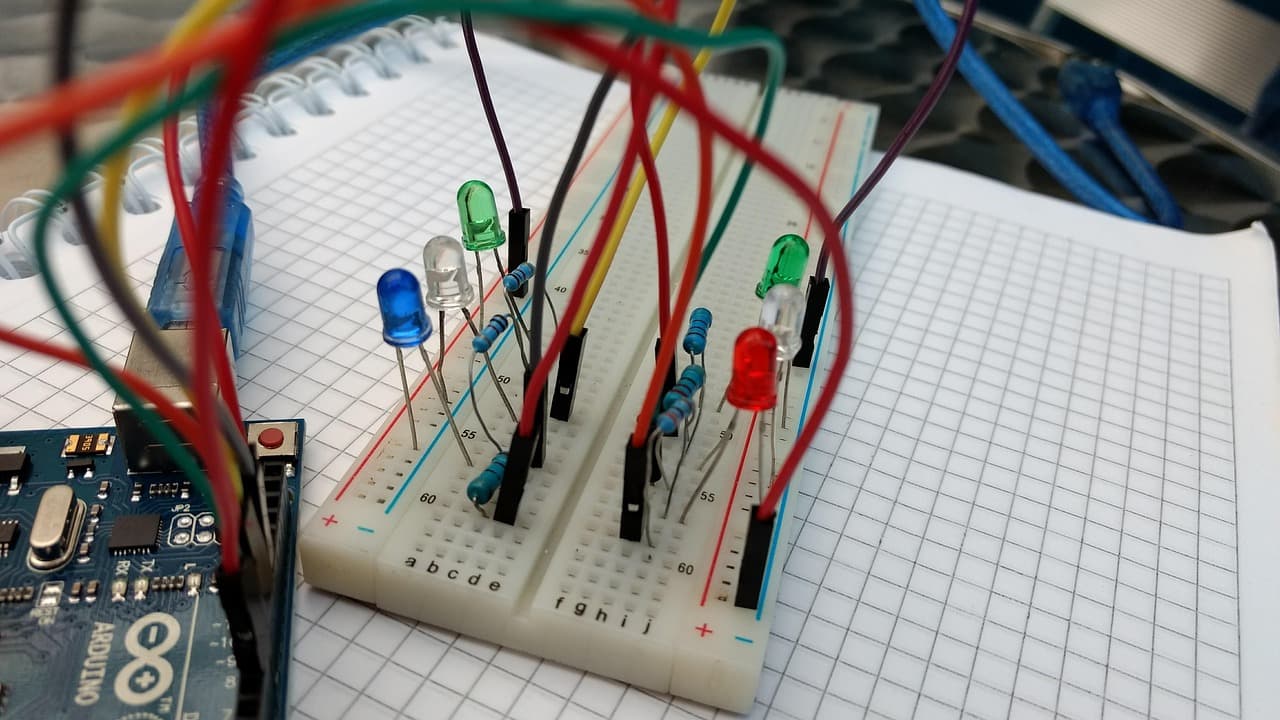
How do winter programs and your own project compare side by side?
What matters | Winter STEM program | Your own project |
|---|---|---|
Structure and deadline | Built in | You set it yourself |
Credential | Often credit, a transcript grade or a certificate | None on its own; you show a demo, code or write-up |
Ownership | Limited; the syllabus is set | Full |
Feedback | From instructors and graders | Only if you find a mentor, teacher or expert |
Time needed | Fixed (6-8 hours a week for CTD Online Honors; Cornell's winter session is close to full-time for three weeks) | Flexible, but usually more than you expect |
Best evidence it produces | A strong grade in a hard course | A working result and a clear explanation of your choices |
Fits MIT's Maker Portfolio or Research Supplement? | Rarely on its own | Yes, if it's substantial and documented |
Common way it fails | Student finishes, but has nothing personal to say about it | Student starts, then stalls in January |
How it reads on the Common App | Clear and easy to verify | Strong if the 150-character description names a real result |
Which should you choose this winter?
Here is the checklist I use with families. Answer each question honestly and count your answers.
Question | If "yes," lean toward | If "no," lean toward |
|---|---|---|
1. Do you already have a specific problem you want to solve? | Own project | Program |
2. Have you finished a project on your own before? | Own project | Program or mentored project |
3. Do you need proof of a subject your school doesn't offer? | Program | Either |
4. Is a college-credit transcript important for your plans? | Program | Either |
5. Do you have someone (teacher, mentor, expert) who will review your work? | Own project | Program or mentored project |
6. Might you submit a Maker Portfolio or research supplement? | Own project | Either |
7. Do you have more than 6 hours a week free from January to March? | Either | Short program or small project |
If most of your answers point one way, you have your answer. If they're split, look at the combined options below.
A few notes on these questions:
On question 1. "I like AI" is an interest. "Families near me can't tell which hospitals their insurance covers" is a problem. If you have a problem, lean toward a project. If you only have an interest, a program can help you find one.
On question 2. If you've started projects and stalled, choose something with live classes or a mentor. This piece on why mentorship matters more than tools in student AI projects explains why.
On question 7. Look at your school calendar, not your hopes. Count exam weeks, sports seasons and family travel. Then read this guide on how much time to spend on extracurriculars each week.
Does the right choice change by grade?
Yes. This is how I'd think about it for winter 2026-27.
Grade 9. Explore. A short program, a weekend class or a small project all work. The goal is to find a problem you want to keep working on for a year or more. Most college-credit winter programs, such as Cornell's, aren't open yet: Cornell requires you to have completed grade 10. Northwestern CTD's Online Honors courses accept grades 9-12.
Grade 10. This is a good year to start the project that could become your main activity. If you want structure, a CTD course or a mentored project program can give you the skills first. If you finish grade 10 by summer, Cornell's winter program becomes an option next year.
Grade 11. This is the winter that matters most for your application, because it's the last full winter before you apply. Choose the option you are most likely to finish. If you already have a project, keep building it and document everything. If you want a college course on your transcript, Cornell's January session is the clearest choice. Keep summer program deadlines on your calendar too.
Grade 12. Most applications are in. A winter course or project can still go into an update letter where colleges allow one, and it gives you a head start on college. Choose it because you want to do it, not for the application.

Can you combine a winter program and your own project?
Yes, and for many students this is the best answer. There are three common ways to do it.
1. Course first, project second. Take a structured course in January, then use what you learned to build something of your own in spring. For example, a student who finishes Cornell's "Introductory Statistics and Data Science" or "Python Programming for Data Analysis" course in January can spend February and March analyzing a public dataset about a problem in their own community. The course gives the skill, and the project gives the story.
2. Project inside a course. Some courses end with an open-ended final project. If yours does, pick a topic you care about and keep working on it after the course ends.
3. Mentored project program. Some programs are built around a project the student chooses. The student gets the structure and feedback of a program but still owns the problem and the result. University programs are one route. Smaller online programs are another; BetterMind Labs, for example, runs a 4-week AI ML program where students build their own AI project with a mentor. Whichever you pick, check that the final project is truly yours and that you can explain every decision in it.
If you'd like to start completely on your own instead, these lists of STEM passion project ideas and AI projects you can build over winter break are good starting points. If cost is a deciding factor, see the companion guide to free and low-cost winter STEM programs for 2026-27.
What should you check before you sign up for any winter program?
Whether it's a university course or a smaller program, I ask families to check these six things first.
- Who runs it? A university, a nonprofit or a company. All can be good, but you should know.
- What do you finish with? Credit, a grade, a certificate, a project or nothing you can show. Get the answer in writing.
- Who owns the work? In a project program, you should choose the problem and be able to explain every part of the result.
- What is the real weekly time? Compare the stated hours to your school calendar.
- Will your school accept the credit? Northwestern CTD says plainly that credit acceptance is your school's decision. Ask your counselor before you enroll.
- What does it promise? A program that promises admission results, publications or awards is a red flag. No honest program can promise those.

What does a strong student project look like in practice?
Student: Bokyung, a 10th grader Project: CareCart Tracks listed: AI + Social Good, AI + Finance (tagged Machine Learning, AI Implementation)
The problem. In the project description's own words, the goal is "helping families in avoiding financial crisis, especially within the United States Healthcare and Insurance system." Families often don't know which hospitals, doctors or procedures their insurance covers until the bill arrives.
What was built. CareCart is an app that connects to a user's insurance and guides families to covered hospitals, procedures and doctors. The project's code is public on GitHub.
The starting point here was a specific, expensive problem that families face, and a user group you can describe in one sentence. Bokyung could have started from "I want to do something with AI" and ended up with a vague chatbot. Starting from the problem is what makes CareCart easy to explain on an application.
How it could read on the Common App. In 150 characters, a project like this could read something like: "Built CareCart, an ML app that matches families' insurance to covered hospitals and doctors to help avoid surprise medical bills." (That's 129 characters. It's my illustration, not the student's own wording.)
What it shows against the checklist above. A clear problem (question 1), a public codebase, which is what MIT's Maker Portfolio asks for (question 6), and a result someone else can try.
One student's project isn't a promise of what every student will build. Scope depends on each student's experience and goals. If you're building a body of work like this, this guide to building an AI portfolio shows how to present it, and these AI and healthcare project ideas are a good place to look for a problem of your own.
What does an 8-week winter project plan look like?
If you choose to build your own project, here is the plan I give students. It runs from early December to early February and works around winter break and January exams.
Week | Dates (2026-27) | Goal | What you should have at the end |
|---|---|---|---|
1 | Dec 7-13 | Pick the problem | One sentence: who has the problem, and why it matters |
2 | Dec 14-20 | Research and scope | Three existing solutions and what's missing from each; a list of what you will not build |
3 | Dec 21-27 (break) | Data and tools | Your dataset or materials, and a working setup |
4 | Dec 28-Jan 3 (break) | First rough version | Something that runs end to end, even badly |
5 | Jan 4-10 | Test with real users or data | Notes from at least two people who tried it, or results on real data |
6 | Jan 11-17 | Fix and improve | The two biggest problems fixed |
7 | Jan 18-24 (exam weeks vary) | Light week | Short log entries only; protect your grades |
8 | Jan 25-31 | Document and share | A short write-up, a demo video (2 minutes or less), clean code, and your draft 150-character description |
Adjust the dates to your school calendar. The order matters more than the exact weeks: problem first, a rough version early, then testing and documentation.

How do you make either choice count on your application?
Whichever path you choose, the same five habits make it count.
- Write down your problem in one sentence before you start. If you can't, you're not ready to build yet.
- Set an end date and a deliverable. "A working demo by February 28" is a plan you can check. "Work on my app" gives you nothing to check.
- Keep a short log with photos or screenshots. Note what broke and how you fixed it. MIT says it's "more interested in your build process than your end results," and your log is that process.
- Track your hours honestly. The Common App asks for hours per week and weeks per year. A simple weekly note makes that easy to fill in later.
- Draft your 150-character description in January. If you can't write a strong one yet, you'll know what to focus on before spring.
Two sample descriptions, for illustration only:
- Program: "Completed Cornell's 4-credit Intro Statistics & Data Science course in Jan 2027; earned [grade]. Used [tool] to analyze [topic] data for final project." (adjust to your real course and result)
- Own project: "Designed and built [project], a [tool] that helps [users] [do what]. Tested with [number] users; code and demo public on GitHub."
For more on how admissions readers see projects, read this piece on how an AI passion project fits into college admissions. If you're still deciding whether a winter program is worth the time at all, this guide on whether winter programs are worth it can help.
Frequently Asked Questions

Leads the AI ML Program at BetterMind Labs. Writes about choosing a first project, program fit, and what parents should ask before enrolling.